
by grace
Share

The answer starts with understanding how healthcare is actually paid for.
First, Let’s Define Enhanced Primary Care vs Traditional Primary Care
Before comparing costs, it’s important to understand what’s actually being compared.
Most traditional primary care practices today are owned by large hospital systems or health networks. These practices are primarily paid by insurance companies every time a patient is seen. Since reimbursement is tied to office visits, physicians often manage panels of 2,000 or more patients and are expected to see 16-22 patients each day, with appointments typically lasting 13-16 minutes. Given this information, a primary care clinician would require 27 hours per day to provide all guideline-recommended preventive, chronic disease, and acute care to a typical patient panel.

The physicians themselves are excellent. The challenge is simply time and capacity. As patient panels grow, appointments become harder to schedule, wait times increase, and many patients end up seeking care at urgent care centers or emergency rooms when they can’t get in to see their own doctor.
Concierge medicine flips that model. Instead of relying almost entirely on insurance reimbursement, patients pay a membership fee that allows physicians to care for significantly fewer patients. Smaller patient panels mean longer appointments, easier scheduling, more direct communication, and greater focus on prevention rather than simply treating illness.
Traditional concierge practices often charge several thousand dollars per year and, in many cases, do not bill insurance for routine primary care services.
Where Delphi Enhanced Primary Care Fits
Delphi combines many of the benefits of concierge medicine with the affordability of traditional primary care. Insurance is still billed for medical services just like a traditional primary care practice. The membership fee pays for something insurance doesn’t: access and experience.
That allows Delphi to maintain smaller patient panels, offer same-day or next-day acute appointments, provide longer visits, and give patients direct access to their physician, all at a fraction of the cost of most concierge practices. Simply put… it’s concierge-level access without concierge-level pricing.

Delphi Enhanced Primary Care is also an independent medical practice. We’re not owned by a hospital system or private equity company. We’re a small business. That matters.
Why Independent Practices Matter
Independent primary care practices are typically reimbursed far less by insurance companies than large health systems are for providing the exact same office visit. In many cases, hospital-owned practices receive significantly higher reimbursement for the same service. On top of that, hospitals are often able to charge an additional facility fee simply because the visit occurred in a hospital-owned outpatient office.
In New Hampshire, those facility fees can average around $159. So while it may seem like a simple primary care visit, the bill could include both the physician’s charge and a facility fee.
Delphi doesn’t charge facility fees. In fact, independent practices can’t. Delphi’s reimbursement for that same office visit is often around $100-$150 depending on the insurance carrier.
Ironically, a $200-$300 physician visit is a fair price, all things considered. Think about it… people don’t hesitate to spend $200 on an oil change and tire rotation because it helps prevent a $10,000 engine replacement.
Why would preventing a heart attack, stroke, or diabetes complications be worth less than maintaining your car? The problem isn’t what doctors are worth. The problem is that the economics of healthcare often make prevention the least financially rewarding part of the system.
So What Does This Mean For Patients?
Most primary care physicians employed by large health systems care deeply about their patients. The challenge isn’t the doctors. It’s the system they work in.
As mentioned earlier, many primary care physicians manage panels of more than 2,000 patients and are expected to see 16-22 patients every day. That often means appointments lasting just 12-15 minutes. As those panels continue to grow, it naturally becomes harder to get an appointment.
The average wait to see a primary care physician is often measured in weeks. So what happens?
People get sick. They call their doctor’s office. The first available appointment is three weeks away. They can’t wait. So they go to urgent care. Or worse, the emergency room. Not because they wanted to. Because they had no other option.

Delphi was built to solve that problem.
When you become a member, you’re not paying for more healthcare: you’re paying for access. Access to your doctor. Access when you’re sick. Access before something small becomes something serious. Longer appointments. Direct communication. Same-day or next-day appointments whenever possible.
Someone who actually knows your medical history. That changes everything.
Now Let’s Compare The Numbers
Delphi’s average membership is $120 per month. That’s $1,440 per year. Let’s assume insurance reimburses an average office visit at $125. The average person sees a healthcare provider about three times per year. For a Delphi patient: Membership: $1,440, Three office visits: approximately $375. Annual total: $1,815
Now let’s compare that with a more traditional experience. A patient sees their primary care physician once. Office visit: approximately $250 Facility fee: approximately $150 Total: $400. A few months later they become sick. Their primary care office can’t get them in quickly. They visit urgent care instead. Urgent care visit: approximately $500 Facility fee: approximately $150 Total: $650. Later that year, the same thing happens again. Another urgent care visit. Another $600-$650. Annual total: Approximately $1,650

You might be thinking…“Wait…that’s actually less than Delphi.” You’re right. On paper. If every patient had the exact same experience, the traditional system could appear slightly less expensive. But healthcare isn’t purchased on paper. It happens in real life. And that’s where the comparison stops being apples to apples.
Because no two patients have the same year. Some people need imaging. Some need physical therapy. Some need specialists. Some need labs. Some end up in the emergency room. That’s where having someone in your corner starts to matter.
Delphi doesn’t just refer patients anywhere, they help identify local, high-value healthcare services. The MRI that’s $500 instead of $5,000. The lab that’s $50 instead of $400. The physical therapy clinic that’s both excellent and affordable. The specialist that can see patients sooner. The surgeon with great outcomes.

Those decisions can save hundreds, or sometimes thousands of dollars. Not because anything magical has been done. Because at Delphi, they’re paying attention and advocating for you. They know the healthcare landscape and how to navigate it. Every patient is different. Which means, every patient’s savings look different. For some people, Delphi pays for itself many times over.
For others, the biggest value isn’t measured in dollars at all. It’s the peace of mind of knowing their own doctor is actually available when they need them.
And That’s Without Talking About Emergency Rooms…
You’ll notice that an ER visit wasn’t included in the comparison above. Why? In order to compare two realistic scenarios that many people experience every year. But the reality is, emergency room visits happen, and are becoming more common.
In fact, when reviewing one claims data, we found 53 emergency room claims totaling more than $150,000. That’s an average of approximately $2,700 per ER visit, with one claim exceeding $15,000. Could every one of those visits have been prevented? Of course not. Emergencies happen.
But many emergency room visits begin as something much smaller, like an infection, worsening cough, urinary tract infection, medication issue, or minor injury, that could have been evaluated much earlier if the patient had timely access to their primary care physician. That’s where access matters. Not every ER visit is avoidable. But many urgent care visits and some emergency room visits can be prevented when patients have a physician they can actually reach.

At the end of the day, Delphi isn’t for everyone. Some people are comfortable waiting weeks for an appointment. Some don’t mind seeing whoever happens to be available. Some are okay navigating the healthcare system on their own. Others want something different. They want access. They want time with their physician. They want someone who knows them. They want guidance before expensive mistakes happen.
Healthcare isn’t just about what you pay. It’s about what you receive. When you compare the experience, the access, the advocacy, the time, and the ability to help patients make better healthcare decisions, the value of Delphi becomes much bigger than a simple dollar-for-dollar comparison. That’s the difference. And that’s why we built Delphi.
Delphi Enhanced Primary Care is dedicated to delivering excellence in primary care through accessible, affordable pricing. By prioritizing patient-centered care and leveraging innovative approaches, such as telemedicine and care coordination, Delphi Enhanced Primary Care aims to overcome barriers to access and provide comprehensive, high-quality healthcare services to individuals and communities in need.
In conclusion, while primary care faces numerous challenges, there are opportunities for improvement and innovation to ensure equitable access and high-quality care for all individuals. By addressing issues related to access, coordination, time constraints, burnout, preventive care, financial pressures, and health disparities, we can build a stronger, more resilient primary care system that meets the needs of diverse populations and promotes better health outcomes for everyone.
Disclaimer: The pricing and cost examples referenced above are based on actual employer paid claims data and are intended for illustrative purposes only. Actual costs, reimbursements, and patient responsibility will vary based on factors including, but not limited to, insurance carrier, health plan design, provider contracts, deductibles, coinsurance, and individual healthcare needs.
Sources:
- National Library of Medicine – PubMed Central “Patient Panel Size and Primary Care Physician Capacity.”
- AMN Healthcare Wood, D. “Average Time Doctors Spend With Patients.” AMN Healthcare.
- American Association of Physician Leaders Weber, D. O. “How Many Patients Can a Primary Care Physician Treat?” American Association of Physician Leaders, February 11, 2019.
- JAMA Health Forum Neprash, H. T., Mulcahy, J. F., Cross, D. A., Gaugler, J. E., Golberstein, E., & Ganguli, I. “Association of Primary Care Visit Length With Potentially Inappropriate Prescribing.” JAMA Health Forum
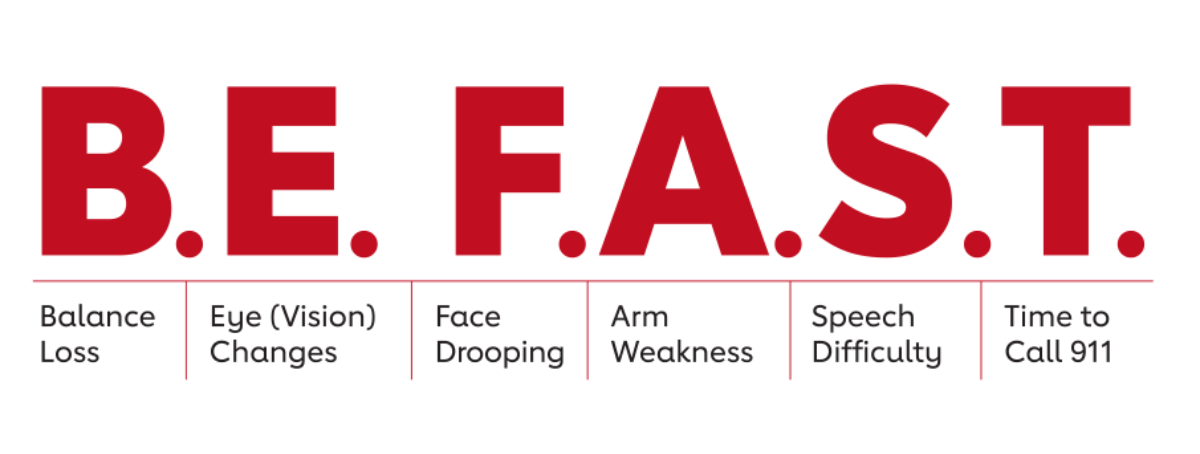
Stroke Awareness Month: May is Stroke Awareness Month, a nationwide effort to educate our communities about what a stroke is, how to recognize the warning signs, and motivate everyone to take steps toward prevention for better health. A stroke happens when blood flow to the brain is suddenly interrupted. This can occur either from a